


How Embryo Glue IVF Improves Your Chances
One of the main reasons patients choose Embryo Glue IVF is that it may help improve implantation during the most critical stage of treatment. The hyaluronan-rich solution acts as a natural bridge between the embryo and the uterine lining, encouraging closer contact between the embryo and the womb. By supporting this interaction, Embryo Glue IVF may improve your chances of successful implantation and pregnancy.
While no fertility treatment can guarantee success, many patients and fertility specialists consider Embryo Glue a valuable addition to modern IVF treatment protocols. Research has shown that a high concentration of hyaluronan may contribute to better implantation outcomes and improved pregnancy rates in selected patients.
Strengthening the Bridge Between the Embryo and Implantation
Infertility can be caused by many different things, and for 1 in 4 couples a cause cannot be identified. If you’re experiencing fertility problems, there are a number of treatments that can help you become pregnant. One of the most refined options available today involves several careful steps to increase the chances of success. The last of these steps is the embryo transfer, once embryos have matured in the laboratory incubator for a few days. To further improve this stage, many clinics now use Embryo Glue, a solution designed to support implantation and make pregnancy more likely. The best embryos will be taken from the culture dish and then placed in a thin tube called the catheter, before being carefully guided through the cervix and into the uterus, where the transfer will take place.
There is nothing more natural for the womb than to have an embryo implanted, yet the process is far from guaranteed. Even when the embryos are healthy, implantation can be one of the most unpredictable stages of fertility treatment. The womb must be perfectly prepared to welcome and support the embryo at just the right time. To make this delicate stage more successful, specialists often recommend using Embryo Glue. This solution helps create the ideal environment inside the uterus, giving the embryo a better chance to attach securely and begin developing. By supporting the natural implantation process, the Glue improves the likelihood of a healthy pregnancy and offers couples extra reassurance during their fertility journey.
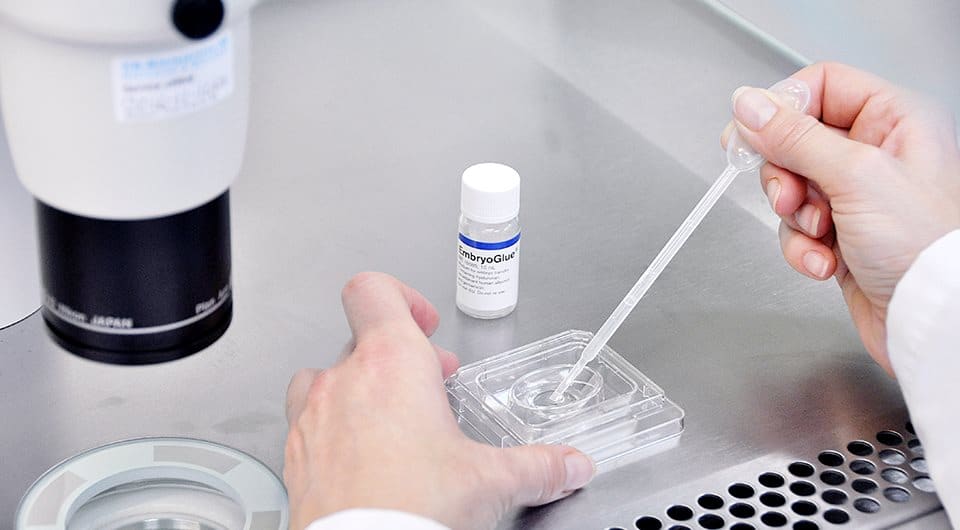
The Role of Hyaluronan During Embryo Transfer
During embryo transfer, the embryo is placed into a specially formulated medium containing a high concentration of hyaluronan. This naturally occurring substance is already present within the reproductive tract and plays an important role in embryo implantation.
The enriched transfer medium is designed to closely resemble conditions inside the uterus. As a result, the embryo and the womb may more easily interact during the implantation window. This supportive environment can help create stronger communication between the embryo and the womb, which is essential for establishing a pregnancy.
Embryo Glue as Part of Fertility Treatment
Many patients undergoing fertility treatment ask whether Embryo Glue is suitable for them. The technique is commonly used for patients experiencing recurrent implantation failure, unexplained infertility, or those seeking additional support during embryo transfer.
Because Embryo Glue works alongside standard IVF treatment rather than replacing it, it can be incorporated into existing treatment plans without requiring additional invasive procedures. For many patients, this added support may increase the chance of success during a cycle and provide reassurance throughout their fertility journey.
Pregnancy Rates and IVF Success
A successful IVF cycle depends on many factors, including embryo quality, maternal age, uterine receptivity, and the implantation process. Although Embryo Glue is not a guarantee of pregnancy, studies suggest that the use of hyaluronan-enriched transfer media may contribute to improved pregnancy rates and live birth outcomes in some patient groups.
By helping create conditions that more closely resemble the natural uterine environment, Embryo Glue IVF offers an additional level of support at one of the most important stages of assisted reproduction.
Giving Your Embryo A Helping Hand
Despite the name, Embryo Glue is not actually a glue. Instead, it is a special solution that the embryo is placed into just before transfer. The way it works is by having a high concentration of hyaluronan and recombinant human albumin two powerful components known to promote implantation and support early development.
FAQs
What is hyaluronan?
Hyaluronan, sometimes called hyaluronic acid, is a natural substance found throughout the human body. It plays a key role in maintaining cell health, tissue repair, and embryo development. In the context of fertility, it is especially important because it influences how well an embryo can attach to the lining of the womb. The uterus naturally produces hyaluronan during the implantation phase, but Embryo Glue contains it at a higher concentration. This enriched formula mirrors the body’s natural processes while enhancing them to improve implantation outcomes.
How does Embryo Glue work?
When used during embryo transfer, it provides additional support in several ways. First, the solution is thickened to more closely resemble the natural fluids of the uterus. This minimises the risk of embryo drift, where the embryo might move away instead of attaching to the uterine lining. Second, hyaluronan in the solution binds to molecules on the uterine wall, acting like a natural bridge between the embryo and the endometrium. This bridge encourages the embryo to settle in place and begin implantation, much like it would during natural conception.
Proven benefits of Embryo Glue
Since its introduction in 2003, Embryo Glue has been widely studied and used in fertility clinics around the world. Research shows that it can significantly increase the chances of a successful pregnancy. Patients undergoing fertility treatments that include embryo transfer can benefit from it, regardless of their age or infertility cause.
The role of Embryo Glue is not to alter the embryo itself but to optimise the surrounding environment. By making the uterus more receptive, it boosts implantation rates, pregnancy rates, and even live birth rates. In fact, documented results highlight that more than 80% of patients undergoing fertility treatment opt to include it during transfer. For many couples, this simple step adds confidence and reassurance at a critical stage in their journey.
Why more patients are choosing Embryo Glue
For those struggling with infertility, even small improvements can make a big difference. This is easy to use, safe, and completely non-invasive. It works seamlessly with existing fertility protocols, requiring no additional procedures or stress for the patient. Many specialists recommend it especially for patients who have experienced repeated implantation failures, as it provides extra support at the most crucial moment.
By strengthening the connection between the embryo and the womb, Embryo Glue gives nature a helping hand. This simple yet effective solution continues to bring hope to couples and individuals seeking to achieve their dream of parenthood.
Who can benefit from Embryo Glue?
Embryo Glue is suitable for a wide range of patients undergoing IVF or other assisted reproductive techniques. It is particularly beneficial for those who have faced repeated implantation failures, older patients, or couples with unexplained infertility. By enhancing the embryo’s ability to attach to the uterine lining, it increases the likelihood of a successful pregnancy without introducing extra risk. Additionally, because it is non-invasive and integrates smoothly with standard fertility protocols, patients can receive the added support without undergoing additional procedures or experiencing extra discomfort.
Embryo Glue – a very simple solution which can have a very positive impact on the chances of success for those suffering from infertility.