Unexplained Infertility: Causes, Diagnosis and Treatment Options
Unexplained infertility is diagnosed when standard fertility investigations do not identify an obvious reason why a couple is unable to conceive. Tests may show normal ovulation, open fallopian tubes and a normal semen analysis, yet pregnancy may still not occur.
For couples facing unexplained infertility, understanding the possible factors involved can help guide the next steps. These may include egg quality, sperm quality or count, fertilisation, embryo development or implantation, all of which can influence the chance of getting pregnant.
Treatment options vary according to age, fertility history, ovarian reserve and previous investigations. Depending on the individual circumstances, treatment may include timed intercourse, IUI or in vitro fertilization (IVF)
How to Get Pregnant with Unexplained Infertility
One of the most common questions couples ask is how to get pregnant with unexplained infertility. Although standard fertility tests may not identify a specific cause, many couples go on to achieve successful pregnancies with the right treatment plan.
The most appropriate approach depends on several factors, including:
- Female age
- Duration of infertility
- Ovarian reserve
- Sperm quality
- Previous fertility treatment
- Overall reproductive health
Your fertility specialist will recommend a personalised treatment pathway designed to maximise your chances of pregnancy while considering your individual circumstances.
What Is Unexplained Infertility?
Unexplained infertility is diagnosed when a couple has been trying to conceive for at least 12 months without success, despite all routine fertility investigations showing normal results.
This means that:
- Ovulation appears normal.
- The fallopian tubes are open.
- The uterus appears healthy.
- Semen analysis is within the normal range.
Although no obvious cause is identified, subtle reproductive factors that cannot be detected through routine investigations may still affect the chances of conception.
How Is Unexplained Infertility Established?
Unexplained infertility is diagnosed when all standard fertility tests show normal results after 12 months of trying to conceive naturally. These tests typically include hormone assessments, semen analysis, HSG (hysterosalpingogram), and evaluation of the uterus and surrounding structures.
Diagnostic Testing
Modern diagnostic testing can identify many common causes of infertility, such as blocked fallopian tubes or poor sperm quality. These conditions can reduce the chance of pregnancy to zero if left untreated. However, more subtle fertility problems, including egg quality issues or sperm DNA fragmentation, are much harder to detect with routine tests.
This is why some infertile couples are told that no clear cause can be identified, even though conception has not occurred.
Why Routine Fertility Tests May Not Find the Cause
Routine fertility investigations are designed to identify the most common causes of infertility. However, some reproductive problems remain difficult to detect using standard diagnostic techniques.
These may include:
- Reduced egg quality
- Mild endometriosis
- Problems with fertilisation
- Early embryo development issues
- Implantation difficulties
- Sperm DNA fragmentation
- Abnormal sperm count or sperm quality
- Problems with cervical mucus
- Issues affecting the uterine lining
For this reason, a diagnosis of unexplained infertility does not necessarily mean that no problem exists. Instead, it indicates that the underlying cause has not been identified through conventional testing.
In Vitro Fertilization (IVF) for Unexplained Infertility
Research shows that couples with unexplained infertility who receive no treatment have only a 1%–3% chance of conceiving each month. For this reason, many couples choose IVF, particularly after three unsuccessful cycles of IUI (intrauterine insemination).
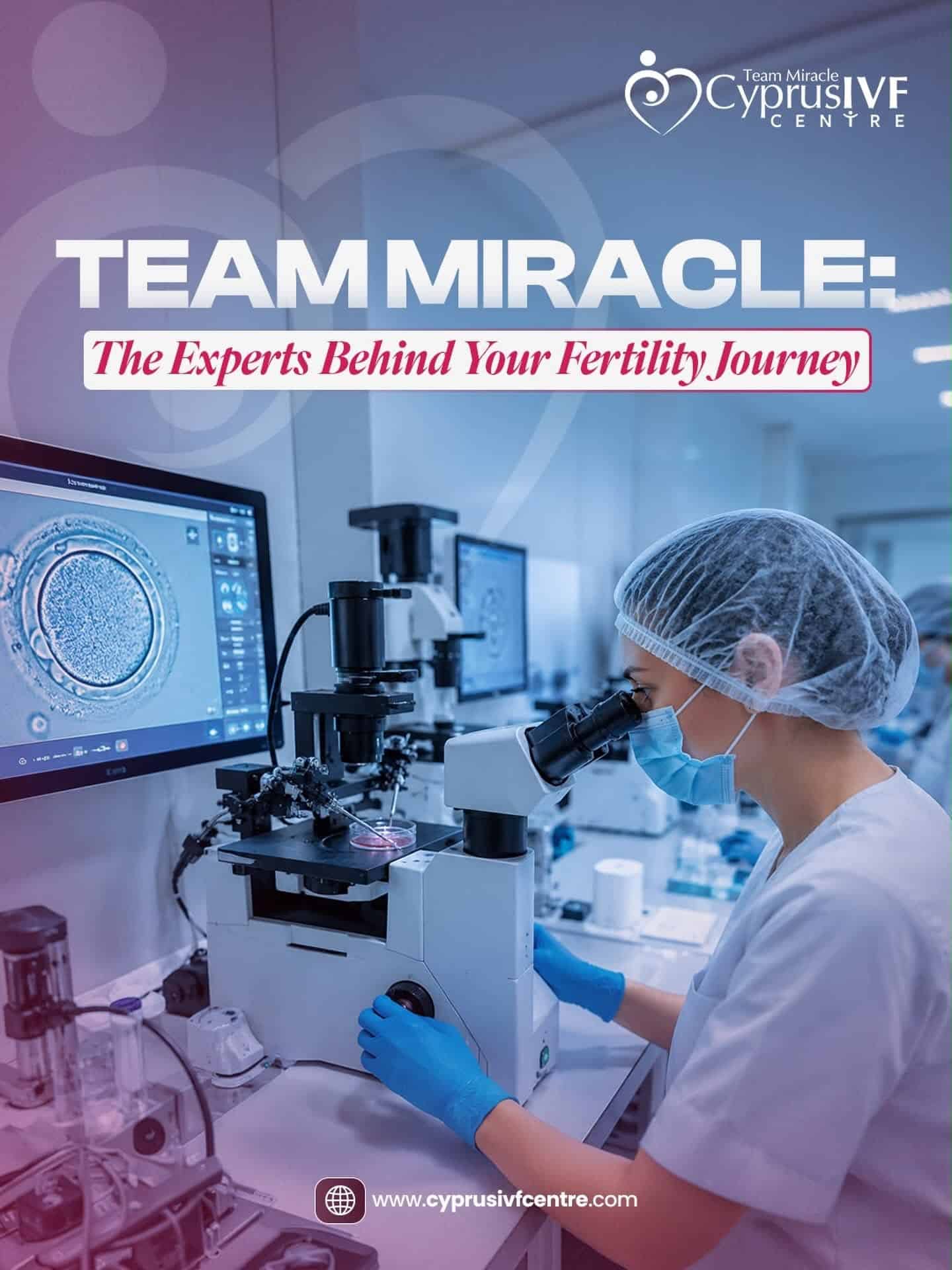
IVF also plays an important diagnostic role. During egg collection at the Team Miracle Cyprus IVF Centre, Team Miracle can examine egg quality under a microscope. Even women with good ovarian reserve may still experience egg quality issues that are not detected through standard testing.
IVF is the only method that allows doctors to observe fertilisation and embryo development directly. Problems with embryo growth or implantation can only be identified through IVF, making it one of the most effective options for unexplained infertility.
Testing Procedures for Unexplained Infertility
Advanced testing may help identify specific causes in some cases. These include:
- Pelvic laparoscopy
- Detailed pelvic ultrasound
- Ovarian reserve testing (AMH, FSH blood tests)
- HSG film review
By combining imaging and hormone testing, a fertility specialist may identify reduced egg reserve as a contributing factor. However, in more complex cases, the underlying cause may remain unknown.
Additional Factors That May Affect Fertility
In some couples, fertility may also be influenced by lifestyle or health factors, including:
- Smoking
- Excessive alcohol consumption
- Obesity or being underweight
- Chronic stress
- Thyroid disorders
- Polycystic ovary syndrome (PCOS)
- Advancing maternal age
Addressing these factors may improve overall reproductive health and complement fertility treatment where appropriate.
Treatment Options for Unexplained Infertility
Treatment is tailored to each couple based on their fertility history, age, and previous investigations.
1. Timed Intercourse
Suitable for couples with normal fertility investigations and regular ovulation.
Benefits
- Least invasive
- Lower cost
- Natural conception
2. Superovulation with IUI
Medication stimulates the ovaries to release more than one egg before insemination.
This approach may improve pregnancy rates, particularly in younger women.
3. Injectable FSH with IUI
Injectable follicle-stimulating hormone (FSH) encourages multiple follicles to develop before insemination.
If pregnancy is not achieved after several cycles, IVF is generally recommended.
4. IVF with ICSI
IVF enables embryologists to observe fertilisation, embryo quality, and embryo development directly.
When combined with Intracytoplasmic Sperm Injection (ICSI), fertilisation rates can often be improved in suitable patients.
When Should You Consider IVF?
Although many couples begin with less invasive treatments, IVF may be recommended earlier if:
- The female partner is over 35 years of age.
- Ovarian reserve is reduced.
- Several IUI cycles have been unsuccessful.
- Pregnancy has not occurred despite prolonged infertility.
IVF allows fertility specialists to gain valuable information about fertilisation and embryo development while offering one of the highest chances of pregnancy for couples with unexplained infertility.
Lifestyle Changes That May Support Fertility
Although lifestyle changes cannot treat every cause of unexplained infertility, maintaining good overall health may support reproductive wellbeing.
Helpful measures include:
- Eating a balanced diet
- Maintaining a healthy body weight
- Regular moderate exercise
- Avoiding smoking
- Limiting alcohol intake
- Managing stress
- Taking folic acid before pregnancy
These measures may complement medical treatment and improve overall health before beginning fertility treatment.
Conclusion
Receiving a diagnosis of unexplained infertility can be frustrating because routine fertility tests do not always identify the underlying cause. However, many couples go on to achieve successful pregnancies through personalised fertility treatment.
Whether treatment involves timed intercourse, IUI, or IVF, the most important step is receiving an individual assessment from an experienced fertility specialist.
If you are wondering how to get pregnant with unexplained infertility, the team at Team Miracle Cyprus IVF Centre will work with you to develop a personalised treatment plan based on your medical history, fertility goals, and the latest reproductive medicine techniques.
FAQs
Can you get pregnant naturally with unexplained infertility?
Yes. Some couples conceive naturally, although the chances may be lower than expected. Your fertility specialist can advise whether expectant management or treatment is the most appropriate option.
What is the best treatment for unexplained infertility?
Treatment depends on age, fertility history, ovarian reserve, and previous investigations. Options include timed intercourse, IUI, and IVF.
Does IVF help unexplained infertility?
Yes. IVF is often recommended because it not only increases the chances of pregnancy but also allows embryologists to assess fertilisation and embryo development more closely.
How long should I try before seeking fertility advice?
General guidance recommends seeking specialist advice after 12 months of trying if you are under 35, or after six months if you are over 35.